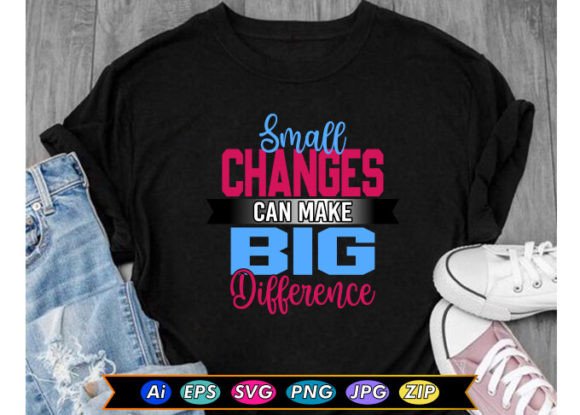
Small Changes Can Make Big Difference
As a designer who’s stitched, sold, and reviewed hundreds of embroidery files over 12 years—first in boutique apparel studios, then launching my own line of handmade nursery goods—I approach every new design with two questions: Will it stitch cleanly on real fabric? and Will the person wearing or gifting it feel seen? When I opened Small Changes Can Make Big Difference, that second question landed first. The phrase “Trust the timing of your life” isn’t just text—it’s a quiet anchor. Soft but certain. Calm but intentional. That tone matters more than you’d think when translating words into thread.
A Design That Breathes on Fabric
My first test was simple: I loaded Small Changes Can Make Big Difference onto my embroidery machine and stitched it onto a natural linen tea towel—medium weight, slightly textured, no stretch. What stood out wasn’t complexity, but restraint. The letterforms are clean, open, and generously spaced—not tight or fussy. There’s no heavy satin stitch outlining, no dense fill behind each character. Instead, it leans into a balanced mix of running stitch for subtle rhythm and gentle fill areas where needed. That makes it unusually forgiving for machine embroidery design work—especially on fabrics that shift or pucker easily.
I’ve used this same layout on custom tote bags for local yoga studios, embroidered baby onesies for Etsy clients, and even as a small chest motif on organic cotton aprons. In every case, Small Changes Can Make Big Difference held up—not because it’s flashy, but because it respects the fabric and the wearer. It doesn’t shout. It settles in.
Where This Design Earns Its Keep
This isn’t a one-size-fits-all graphic. It shines brightest where intention meets simplicity:
- Personalized gifts: A sweatshirt for someone navigating a career pivot, a pillow cover for a new parent, a kitchen towel for a friend recovering from surgery—Small Changes Can Make Big Difference lands with warmth, not cliché.
- Boutique branding: Paired with neutral apparel or minimalist packaging, it adds quiet confidence to small shop products without competing with logos or patterns.
- Holiday embroidery: Think linen stockings, wool-blend blankets, or embroidered gift tags—places where legibility and emotional resonance matter more than ornamentation.
- Commercial embroidery: Because the file includes editable AI, SVG, and EPS formats, I’ve adapted it for client brand guidelines—tightening kerning for caps, simplifying stroke weight for patches, or scaling down for baby embroidery without losing clarity.
It also works beautifully as a digital embroidery file for mockups. I use the high-res JPG version in Canva templates for Etsy listings—clean, centered, on oat-colored fabric—and buyers consistently comment on how “calm” and “thoughtful” the presentation feels.
Where to Pause—and Test
That said, Small Changes Can Make Big Difference isn’t magic. Like any embroidery file, it needs thoughtful pairing. Here’s where I slow down:
- Stretchy fabric: On lightweight jersey or ribbed knits, the open letter spacing can read as fragile. Always pair with cutaway stabilizer—and test stitch before committing to a full run of custom apparel.
- Dark fabric: The design relies on contrast. On charcoal or navy, lighter thread colors (ivory, soft gray, pale sage) read better than stark white. Run a black-and-white mockup first to check value separation.
- Tiny hoop sizes: While it scales well, avoid shrinking it below 3.5 inches wide on curved surfaces like caps—the bottom curves of letters like “g” and “y” need breathing room to stitch cleanly.
- Textured or napped fabrics: On terry cloth towels or fleece, fine details soften. If you’re stitching Small Changes Can Make Big Difference onto a holiday blanket, consider adding a single outline stitch (not satin) to reinforce legibility.
What It Adds to Your Finished Product
Let’s be practical: this design doesn’t increase stitch count. It doesn’t add flash. But it does something quieter—and often more valuable. It raises perceived product value by signaling care in curation. A customer buying an embroidered tote bag with Small Changes Can Make Big Difference isn’t just buying utility—they’re buying a moment of pause. That builds trust. That encourages repeat purchases. That makes your craft business feel human, not transactional.
I’ve watched this play out across channels: Etsy sellers report higher engagement on listings featuring this phrase; boutique owners tell me customers ask specifically about the meaning behind it; and at craft fairs, people linger longer at displays where it appears on tea towels or baby blankets. Why? Because it invites connection—not decoration.
Designer Notes You’ll Actually Use
Before stitching Small Changes Can Make Big Difference into your next project, here’s what I do—every time:
- Test on scrap fabric matching your final substrate (same weight, same stretch, same finish).
- Check thread color contrast using both light and dark fabric swatches—not just on screen.
- Review stitch density visually: look for areas where fill might overwhelm delicate curves (it rarely does here, but always verify).
- Confirm hoop size compatibility—especially if adapting for patches or caps.
- Inspect corners and terminals: does the “.” at the end hold shape? Does the curve of the “T” land cleanly? (It does—consistently.)
- Use the editable AI or SVG file to adjust spacing if pairing with another design—this is where the flexibility pays off.
- Verify licensing terms before selling finished items or bundling the digital file—since only JPG, AI, SVG, EPS, and “Transpa” are listed, confirm commercial rights directly with the creator.
At its core, Small Changes Can Make Big Difference is proof that thoughtful design isn’t about doing more—it’s about choosing what to leave out. Whether you’re stitching for joy, for clients, or for your growing craft business, this is the kind of graphics piece that earns its place—not through volume, but through resonance.