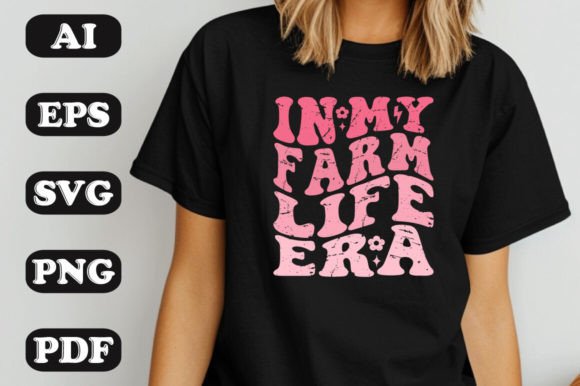
In My Farm Life Era SVG
First Impressions: Rustic Charm, Not Rustic Clutter
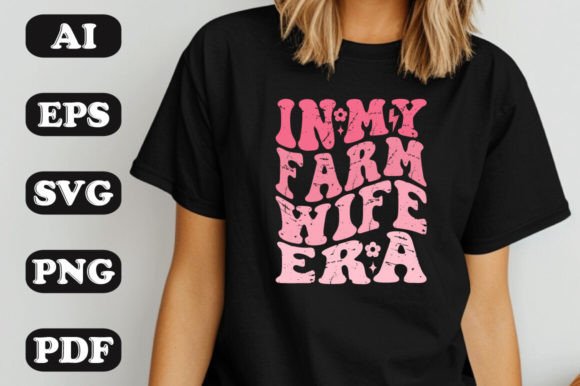
Opening In My Farm Life Era SVG feels like flipping through a well-loved farmhouse journal—warm, grounded, and quietly confident. It’s not loud or overly detailed; instead, it leans into clean lettering with subtle organic flourishes—a tiny wheat stalk tucked beside the “F,” a soft curve on the “R” that echoes a rolling hill. The layout breathes. There’s generous spacing between words, no cramped kerning, and the overall shape fits comfortably within a 4" x 4" hoop without feeling squeezed. That matters. As someone who’s stitched hundreds of phrases onto sweatshirts, tote bags, and baby onesies, I know this kind of balance translates directly to fewer thread breaks, smoother satin stitches, and cleaner trimming.
A Real Project Test: Embroidering It on a Linen-Cotton Tea Towel
Last week, I used In My Farm Life Era SVG for a small-batch order of kitchen towels for a local boutique. Linen-cotton blend—textured, slightly uneven, unforgiving with dense fills. I digitized the design myself (yes, even when SVGs are provided, I always re-digitize for embroidery), simplified the inner curves just enough for stability, and kept stitch density moderate—not too sparse to lose definition, not so dense it buckled the fabric. The result? Crisp legibility at 3.5", warm tone-on-tone thread pairing (ecru on oat), and zero puckering. Customers noticed. One emailed asking if it came in a matching apron version. That’s the quiet power of this design: it doesn’t shout—it invites.
Where It Shines (and Where It Needs Care)
In My Farm Life Era SVG works beautifully across several handmade product categories—but context is everything:
- Custom apparel: Ideal for crewneck sweatshirts, relaxed-fit tees, and lightweight denim jackets. The letterforms hold up well at 3.75–4.5" wide, especially with a light stabilizer backing.
- Tote bag design: A natural fit. Stitched on canvas or medium-weight cotton duck, it reads clearly from three feet away—and feels intentional, not generic.
- Baby embroidery & nursery decor: Softens nicely on gauzy muslin or organic cotton blankets when scaled down to 2.75". Just avoid the tiniest flourishes if stitching on preemie onesies—those fine details can vanish under dense fill.
- Embroidered patch: With minor cleanup (tightening corners, smoothing vector joins), it converts cleanly to a sew-on or iron-on patch. Great for farm-themed Etsy shops or craft fair booths.
Proceed with care on:
- Stretchy fabric (like jersey knits)—use cutaway stabilizer and reduce pull compensation in your software.
- Dark fabric—test thread contrast early. Light tan or olive thread reads warmer and more authentic than stark white.
- Caps & curved surfaces—the line weight holds, but avoid placing it over the crown seam. Center it on the front panel instead.
- Frequent-wash items (baby bibs, tea towels)—confirm your satin stitch width and underlay settings prevent fraying over time.
What It Adds to Your Finished Product—Beyond the Thread
This isn’t just a phrase—it’s a mood anchor. When customers see In My Farm Life Era SVG on a hand-stitched pillow cover or a small-batch apron, they don’t just read words. They feel continuity: a story about roots, rhythm, and quiet intention. That lifts perceived value. For Etsy sellers, it helps listings stand out in a sea of generic quotes. For craft fairs, it sparks conversation—not just “where’d you get that?” but “is your garden doing well this season?” That kind of resonance builds trust and repeat buyers.
It also supports brand consistency. If your shop leans into earthy, unhurried aesthetics—think neutral palettes, natural fibers, minimal packaging—In My Farm Life Era SVG reinforces that voice without needing extra explanation. No forced slogans. No visual noise. Just clarity, warmth, and craft integrity.
Practical Embroidery Designer Notes
Before stitching your first In My Farm Life Era SVG project:
- Test on scrap fabric—especially if using textured, dark, or stretchy material.
- Check thread color contrast in both natural and artificial light. What looks balanced on screen may fade on oat linen.
- Review stitch density. If digitizing yourself, aim for 8–10% underlay and moderate satin stitch width (0.4–0.6mm) for readability without stiffness.
- Confirm hoop size compatibility. While the vector fits standard 4" hoops, double-check your machine’s max embroidery area before scaling.
- Inspect small details—the wheat motif, the terminal swashes—in black-and-white mockups. If they disappear at thumbnail size, simplify them.
- Use appropriate stabilizer: tear-away for stable cottons, cutaway for knits or linens, and fusible for lightweight silks or voiles.
- Verify licensing terms. Since this is listed as a T-Shirt Design and Graphics file set, confirm whether commercial use (e.g., selling embroidered tote bags on Etsy) is permitted under the original license.
- Compare performance on light vs. dark backgrounds. Some flourishes gain depth on charcoal; others need bolder thread to stay legible.
Final Thought: A Design That Serves the Maker First
In My Farm Life Era SVG doesn’t try to be everything. It’s not flashy. It won’t dominate a tradeshow booth by itself. But in the hands of a thoughtful designer or small shop owner, it becomes a reliable, evocative tool—like a favorite needle or a trusted bobbin thread. It supports the work instead of competing with it. Whether you’re embroidering a holiday gift for a friend who just bought her first acre, launching a line of farmhouse-style kitchen textiles, or building a cohesive digital embroidery file collection for your craft business, this design earns its place—not because it’s trendy, but because it’s quietly, consistently useful.