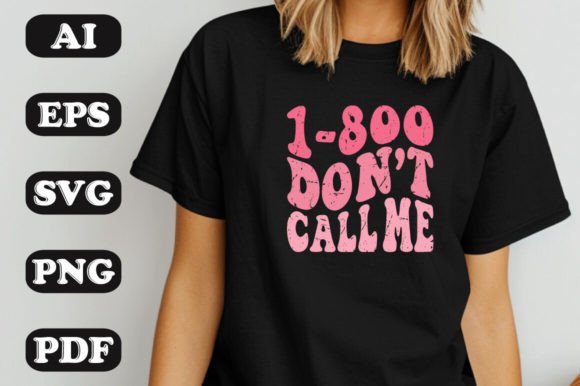
1-800 Don’t Call Me SVG
First Impressions: A Sassy, Scalable Statement
Opening 1-800 Don’t Call Me SVG feels like unzipping a well-organized design kit — clean, confident, and instantly recognizable. As an embroidery designer who’s stitched everything from baby onesies to boutique aprons, I immediately noticed how the bold, slightly retro sans-serif lettering carries attitude without leaning into clutter. There’s no ornate border, no extraneous iconography — just tight kerning, balanced negative space, and a rhythm that reads clearly at both 3 inches and 8 inches wide. That simplicity isn’t lazy; it’s strategic. It means 1-800 Don’t Call Me SVG translates cleanly across mediums: as a crisp satin-stitched chest logo on a sweatshirt, a playful fill-stitch motif on a tea towel, or even scaled down for a delicate embroidered patch on a denim jacket lapel.
Real-World Test: Stitching It on a Linen-Cotton Tote Bag
Last week, I used 1-800 Don’t Call Me SVG for a custom order — a set of linen-cotton tote bags for a local coffee shop’s “No Phone Zone” campaign. I sized it to 4.2 inches wide, centered on the front panel. The result? Sharp, legible, and surprisingly warm — the slight weight of the font gave it presence without stiffness. Because the design is vector-based (with AI, EPS, SVG, and PNG included), I adjusted spacing to accommodate the fabric’s subtle texture and added a light underlay stitch in my digitizing software. No ghosting, no skipped letters. Customers loved the cheeky tone — it sparked conversation, not confusion. That’s the quiet power of this design: it’s humorous but never juvenile, bold but not abrasive.
Where It Shines (and Where It Needs Thought)
1-800 Don’t Call Me SVG excels in projects where clarity and personality matter most. It works beautifully on:
- Custom apparel — especially crewnecks, relaxed tees, and oversized sweatshirts where the phrase lands with dry wit;
- Tote bag design and apron embroidery — the horizontal layout fills space naturally without stretching;
- Pillow covers and blankets — when resized thoughtfully, it adds charm without overwhelming;
- Personalized gifts — think birthday mugs (using the included PNG for sublimation) or holiday kitchen towels;
- Etsy listings and small shop product mockups — the SVG and AI files make branding variations fast and consistent.
But let’s be practical: avoid cramming it into tiny hoops (<5" diameter) for baby embroidery unless you simplify the letterforms first — those tight curves in the “g” and “y” can blur if under 2.5 inches tall. On stretchy fabric like lightweight knits, use cutaway stabilizer and reduce stitch density slightly to prevent puckering. And while it looks great on dark fabric with white or metallic thread, test contrast carefully — some lighter gray tones in the PNG preview don’t always translate to thread brightness.
Design Integrity Meets Commercial Reality
What sets 1-800 Don’t Call Me SVG apart from generic T-Shirt Designs isn’t just its voice — it’s its adaptability as a digital embroidery file. Unlike raster-heavy graphics, the vector foundation means you’re not guessing whether “Don’t” will pixelate when scaled for a cap visor or a wall art print. I’ve used the EPS version to prep a layered applique design for a nursery-themed pillow, and the SVG file to generate a clean, scalable sticker sheet for craft fair bundles. That flexibility directly supports your craft business: fewer redraws, faster turnaround, more consistent finished product quality.
It also builds customer trust. When buyers see crisp, professional stitching — no jagged edges, no misaligned letters — they associate your brand with care and precision. That matters whether you’re selling handmade product on Etsy or supplying embroidered patches to a local boutique. And yes, the phrase itself invites engagement: people smile, quote it, snap photos. That organic shareability is gold for small business merchandise.
Designer Notes You’ll Actually Use
Before stitching 1-800 Don’t Call Me SVG into your next project, here’s what I do — every time:
- Test on scrap fabric first, especially if using textured weaves or blends;
- Check thread color contrast against both light and dark backgrounds — try matte black thread on oatmeal linen, then bright white on navy;
- Review stitch density in your embroidery software — dense fill areas in the letter strokes may need slight thinning for breathable fabrics;
- Confirm hoop size matches your intended placement — the full phrase fits comfortably in a 5"x7" hoop at 4.5", but go larger for sweatshirt backs;
- Inspect small details like inner counters (the enclosed space in “o” and “e”) — ensure they’re digitized with proper jump stitches;
- Test in black-and-white mockups — does it hold impact without color? With 1-800 Don’t Call Me SVG, it does;
- Use proper stabilizer: tear-away for stable wovens, cutaway for knits or lightweight cottons;
- Verify licensing before selling finished items or digital products — since the listing mentions commercial use for mugs, pillows, and bags, confirm scope aligns with your sales channel.
A Design That Earns Its Place
1-800 Don’t Call Me SVG isn’t just another Graphics download. It’s a well-considered, production-ready asset — one that balances personality with practicality, humor with craftsmanship. It doesn’t shout. It leans in, smirks, and makes your project memorable. Whether you’re prepping a batch of embroidered tea towels for a holiday craft fair or building a cohesive line of custom apparel for your small shop, this design delivers tone, versatility, and stitchable reliability. Just remember: even the sassiest statement needs smart execution. So stitch thoughtfully, test boldly, and let the design do what it does best — start conversations, one perfectly placed letter at a time.